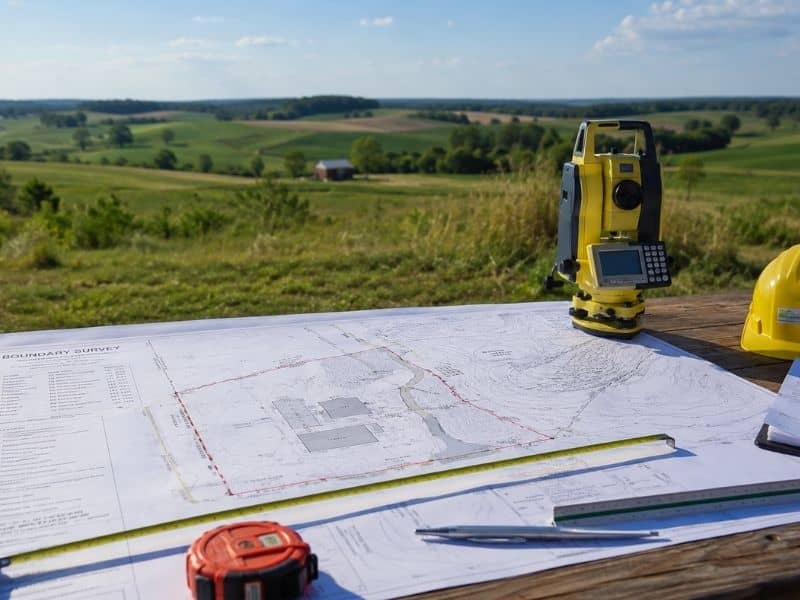

Buying land or planning a project often comes with a lot of questions. Where exactly are the property lines? Can you build a fence near the edge of the lot? Does that driveway belong entirely to you? Is there anything hidden on the property that could affect future plans?
Many property owners receive a survey and look at it like it is written in another language. There are lines, symbols, measurements, and notes scattered across the page. At first glance, it can feel confusing.
The good news is that you do not need to be a surveyor to understand the basics.
Learning how to read a land survey can help you make smarter decisions before buying, selling, building, or improving property. It can also help you spot issues early and avoid expensive surprises later.
Why Property Owners Should Learn to Read a Survey
A land survey can answer questions before problems happen.
People often assume a fence marks a property line. Others think a tree line or driveway creates a boundary. Sometimes those assumptions are wrong.
Knowing how to read a survey can help property owners:
- Understand legal property limits
- Plan future projects
- Avoid boundary mistakes
- Identify restrictions
- Spot possible issues before construction begins
For example, someone planning a workshop or pool may think there is enough space. Then the survey reveals utility easements or setback restrictions that reduce the buildable area.
Learning to read the survey first can prevent frustration later.
What Information Is Shown on a Land Survey?
Most surveys include several key elements. Understanding these parts makes the document easier to read.
Look for:
- Property lines
- Distances and dimensions
- Bearings and directional information
- Easements
- Existing structures
- Property corners
- Rights-of-way
- Survey notes
Not every survey contains the same information. Some surveys focus only on boundaries, while others include more details depending on the project.
Start With the Title Block
To read a land survey, start with the title block, property description, north arrow, scale, boundary lines, and legend. Then review measurements, easements, structures, and notes. If something affects ownership, access, or construction, ask a licensed surveyor to explain it before making decisions.
Most surveys have a title block near the top or bottom of the page.
This section often includes:
- Property owner information
- Survey date
- Property address
- Survey type
- Survey company information
- Legal description reference
Think of the title block as the survey’s introduction. It gives context before you review the map itself.
Understand Property Lines and Boundaries
Property lines show the legal limits of a parcel based on records, field measurements, and survey evidence. They may not match fences, trees, driveways, or online maps. A survey helps confirm where the land begins and ends so owners can avoid boundary mistakes.
Boundary lines are usually one of the most important parts of a survey.
These lines define the legal edges of the property.
Along the boundary, you may see:
- Measurements
- Distances
- Angles
- Bearings
- Property corner markers
You may also notice labels identifying monuments or markers found during field work.
Keep in mind that physical objects do not always match legal boundaries.
A fence can sit several feet inside a property line. A driveway may cross onto neighboring land. Looking at the survey helps clarify what actually exists.
Learn Common Survey Symbols and Abbreviations
Survey maps often use abbreviations to save space.
Some common examples include:
| Symbol | Meaning |
| R/W | Right-of-way |
| POB | Point of Beginning |
| Easement | Area with shared legal use rights |
| Setback | Required distance from property line |
| IPF | Iron Pin Found |
| IPS | Iron Pin Set |
These labels help surveyors communicate large amounts of information in a smaller space.
Most surveys include a legend that explains symbols and line styles. Review this section before assuming what markings mean.
What Easements Mean on a Survey
Easements are areas where another party may have the legal right to use part of the property. Utility companies, neighbors, or public agencies may hold easement rights. These areas can limit where owners build fences, driveways, additions, or other improvements.
Easements often surprise property owners.
Someone may believe they own and control every square foot of land. Then they discover utility access rights running through part of the lot.
Common easements include:
- Utility easements
- Drainage easements
- Shared access easements
- Public access areas
These locations may affect future plans.
Always review easements before starting construction projects.
When Should You Ask a Surveyor for Help?
A property owner should ask for help when a survey shows easements, encroachments, unusual boundaries, flood notes, access issues, or unclear measurements. A licensed surveyor can explain how these details may affect buying, building, selling, or improving the property.
Some surveys are straightforward.
Others become more complicated.
Questions often come up when:
- Structures cross boundaries
- Easements appear near planned construction
- Measurements seem unclear
- Property corners cannot be located
- Access rights affect land use
Professional guidance can help prevent mistakes.
Understanding a Survey Starts With Asking Questions
A land survey can look complicated at first. Once you understand the basic parts, the information becomes much easier to follow.
Learning how to read a survey helps property owners move forward with more confidence.
Whether you are buying land, planning improvements, or preparing for construction, understanding the details of a survey can help you avoid confusion and make better decisions.
Good property decisions begin with accurate information.
Frequently Asked Questions
Can I use online maps instead of a survey?
Online maps can provide a general reference, but they may not have survey-level accuracy.
Do fences always show the property line?
No. Fences are not always built directly on legal boundaries.
Are all surveys the same?
No. Different survey types provide different information depending on the purpose.
Can easements affect construction plans?
Yes. Easements can limit where structures or improvements can be placed.
Should I ask questions about my survey?
Yes. If anything appears unclear, speaking with a licensed surveyor can help avoid misunderstandings.